In 2026, the United States celebrates the 250th anniversary of the Declaration of Independence. The anniversary has reignited debate over the nation’s founding, the role of the Founders, and the way that history is told through film, television series, documentaries, and public commemorations. We discuss these questions with historian Susan Brynne Long, professor of History at the University of Nebraska at Omaha and a specialist in the American Revolution.
In 2026, the United States celebrates the 250th anniversary of the Declaration of Independence. Why, two and a half centuries later, does the American founding continue to occupy such a central place in public debate?
For many historians, it is almost surprising. Normally, we spend our time in archives reading documents that no one has consulted for hundreds of years. All of a sudden, millions of people want to talk about the American founding. I think this happens because the United States is going through a period of intense political and cultural polarization. In moments like this, societies tend to return to their founding myths in search of answers to the questions of the present. The American Revolution remains one of the most important moments in national history: the moment when colonies that were very different from one another managed to come together around a common political project. The problem is that this history is often remembered in simplified ways. The anniversary offers a valuable opportunity to return to the sources and understand that the founding of the United States was much more complex, contested, and uncertain than many popular narratives suggest.
What are the most widespread myths surrounding the American Revolution?
One of the myths I always try to get students to understand is that the people involved knew in advance what they were about to accomplish. We know how the story ends, and for that reason we tend to read the history as if it were inevitable. But the men and women who lived through the Revolution had to invent much of the path as they walked it, without knowing clearly where it would lead. They did not have a book that said, “This is how you build a new republic after defeating one of the greatest powers in the world.” They had very few successful examples in world history to which they could look. Every decision involved enormous risks. Moreover, they were not simply fighting a war against Great Britain. They also had to build a new political order. A revolution cannot simply destroy the old system; it has to be able to replace it with something stable. Americans understood that, and for precisely that reason they preserved many British institutions and practices.
So the idea of a complete break with Great Britain is also, in part, a myth?
Absolutely. When we speak of revolution, we often imagine a sharp break between a before and an after. In reality, American revolutionaries preserved many elements of the British tradition: legal principles, political procedures, administrative forms, and practices of government. That does not mean there was no desire for radical change. It means, however, that the leaders of the Revolution understood that a society cannot be rebuilt from scratch. Many of the structures that allowed the new republic to survive came precisely from the British experience.
Over time, cinema, television, and theater have helped shape the public image of the American founding. How has that story changed?
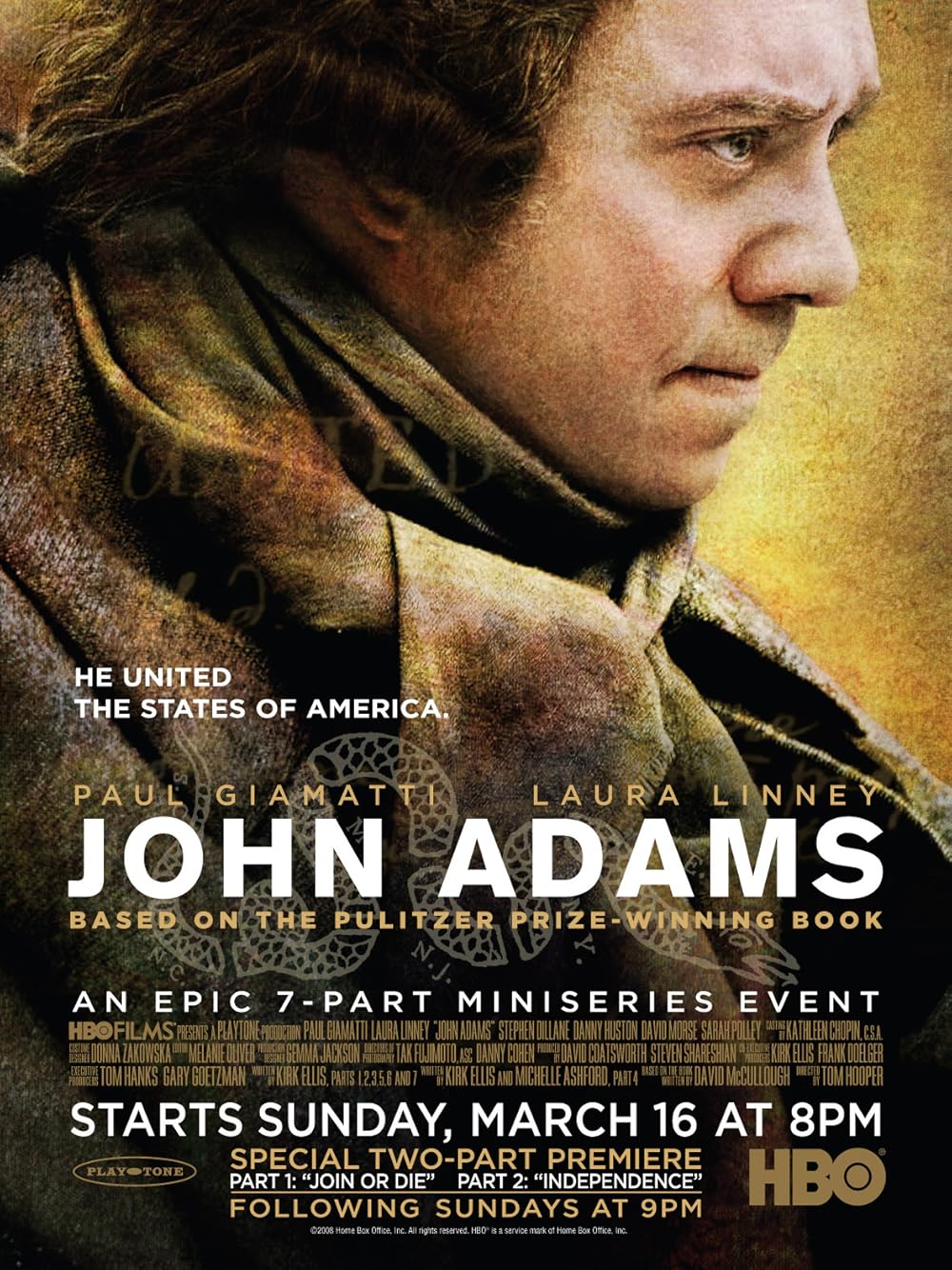
In fact, the representation of the American Revolution is almost contemporary with the events themselves. Already during the war, there were theatrical performances, political satires, and forms of entertainment for soldiers. With the twentieth century came the first major cinematic representations. One of the first projects I worked on was the digitization of America, a 1924 film that contains one of the earliest surviving appearances of George Washington on screen. For much of the twentieth century, the dominant tendency was celebratory. The Founders were presented as almost legendary figures, while the more controversial aspects of American history remained in the background. In recent decades, however, the picture has become much more complex. Today we see protagonists who are more human, less idealized, and closer to historical reality. Productions such as John Adams clearly show this change.
What do these representations tell us about the societies that produce them?
They tell us a great deal about their own present. Each generation interprets the American founding through its own concerns. During the Vietnam War, for example, many works reflected a desire to recover a sense of national unity during a period of deep division. The same was true during the years of desegregation. We see something similar today. The American Revolution continues to be perceived as the moment when very different people managed to unite around a common cause. For this reason, many representations tend to emphasize unity and reduce complexity. As a historian, however, I think it is important to remember that this unity was neither simple nor perfect. It was the result of negotiations, conflicts, and compromises.
What other myths about the American founding do you consider especially persistent?
One very widespread myth concerns George Washington and the Continental Army. The war is often told as a story of soldiers who were constantly hungry, barefoot, and on the verge of collapse. It is true that conditions were often dramatic and that logistical problems were enormous. However, it is important to remember that Washington was also a very strategic political actor. When he wrote to Congress describing the lack of shoes or food, he was not only reporting a real situation. He was also trying to persuade political representatives to send additional funds and supplies. In other words, he was a commander who knew how to use communication strategically. He would never have written to Congress that everything was going well, because that would have reduced the urgency of supporting him.
There is also the question of who actually fought the Revolution.
Exactly. When people talk about the American founding, they often focus almost exclusively on the great names: Washington, Jefferson, Adams, Madison. They are fundamental figures, and they deserve all the attention they receive. But they were not the only protagonists. At the time of the war, about two and a half million people lived in the colonies. Women, ordinary men, African Americans, enslaved people, Indigenous peoples, and laborers all helped shape the events. If we concentrate all our attention on the so-called Founding Fathers, we risk losing sight of the collective dimension of the Revolution.
In recent years, musicals and television series have played an important role in renewing interest in this historical period.
Yes, and I think that is a very positive phenomenon. One interesting example is 1776, which helped bring to a broad public greater awareness of the role played by the North in the economy of slavery. For a long time, Americans imagined slavery as an exclusively Southern institution. Historians had already begun to challenge that interpretation, and the musical helped bring that debate to a much wider audience. More recently, Hamilton had a similar effect. Beyond its artistic success, it encouraged millions of people to ask questions about the relationship between revolutionary ideals and the deep contradictions of eighteenth-century American society.
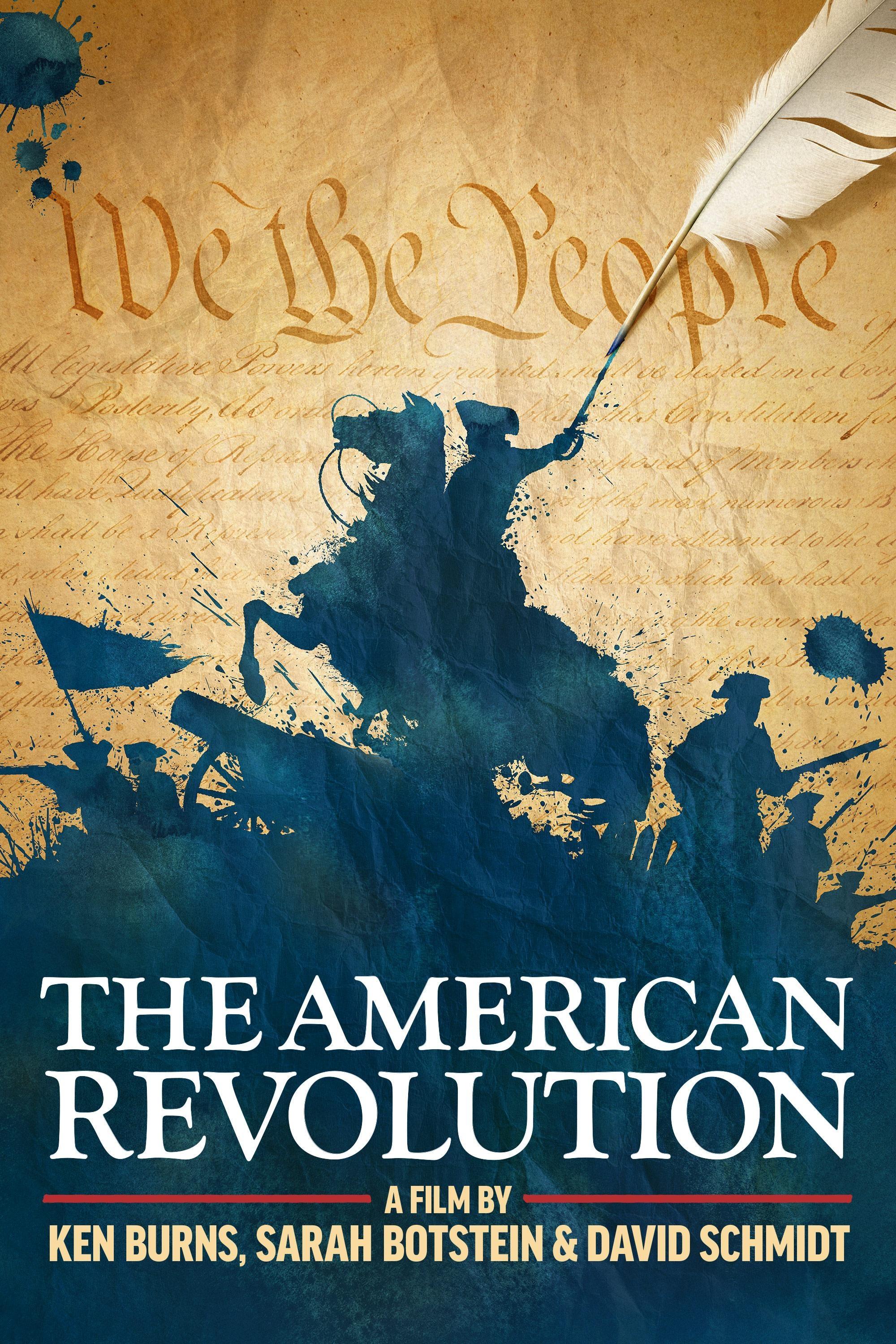
Another much-discussed production has been Ken Burns’s docuseries on the American Revolution. How do you assess it?
I consider it a very important work. I especially appreciate its level of historical detail and its ability to convey the complexity of the conflict. One of its most interesting features is the role played by historical reenactors. Many of them know incredibly specific details about uniforms, military equipment, encampments, and the daily life of soldiers. When we watch a historical documentary and see soldiers cleaning muskets, preparing food, or reconstructing a battle, we are very often seeing the work of these enthusiasts. The visual quality and accuracy of many productions depend to a large extent on their knowledge.
How do contemporary political debates influence the way the American founding is told?
They influence it deeply. My impression is that in recent years there has been growing pressure toward an exclusively celebratory narrative of the national founding. I understand the reasons for that choice: the idea is that a positive story can encourage national cohesion. However, I think this is a risky approach. A public memory built only on the glorious aspects of the past ends up being fragile and not very credible. American history contains extraordinary elements and deeply problematic ones. To ignore either dimension is to give up on truly understanding the past.
How do you help your students develop a critical eye toward these representations?
I start precisely from the films and series they already know. Many students come into the classroom having seen The Patriot, Hamilton, John Adams, or other productions set during the Revolution. I never treat that interest as a problem. On the contrary, it is an excellent starting point. We analyze a scene and then turn to the sources used by the screenwriters: letters, diaries, official documents. I ask students to compare the two versions and identify what has been changed, emphasized, or omitted. The goal is not to teach them what to think, but to give them the tools to verify information for themselves and build arguments grounded in sources.
Looking ahead, what aspects of the American founding deserve greater attention from researchers?
I think one of the most promising directions concerns the relationship between war and society. For a long time, military history was studied separately from political, economic, and social history. Today many scholars are trying to move beyond that division and to understand how the lived experience of war influenced the birth of American institutions. The Constitution and the founding documents did not appear magically on paper. They were the product of people who had lived through years of conflict, deprivation, fear, and social transformation. Understanding how the experience of war shaped those ideas is, in my view, one of the most interesting challenges for scholarship on the American Revolution in the coming years.