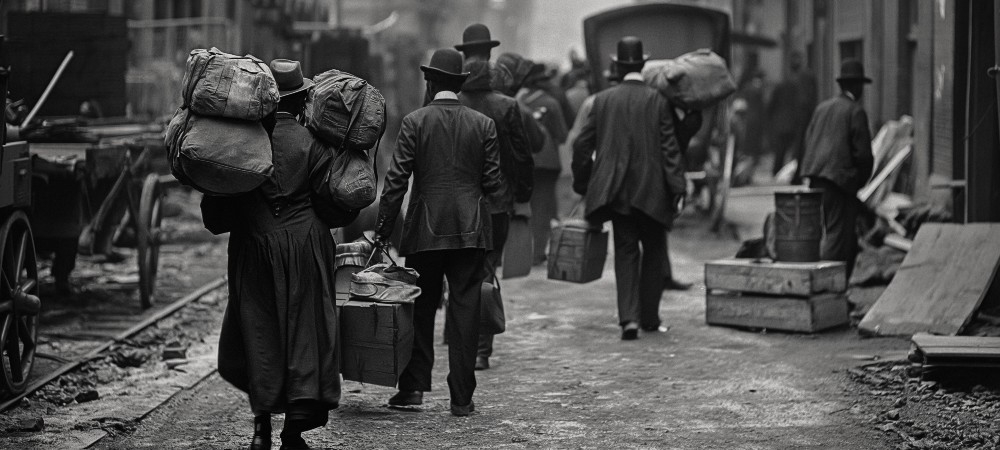
Openness to newcomers in a revolutionary republic has evolved over time, often undergoing sudden accelerations and abrupt reversals according to the political and economic circumstances of the moment. Disputes over citizenship between the federal government and local administrations shaped the debate, while the Supreme Court played a pivotal role in defining its boundaries.
Amid President Donald Trump’s aggressive, often unilateral, immigration actions—and widespread opposition to his agenda—the American republic’s 250th birthday offers an opportunity to reflect on key milestones and patterns in the development of US immigration policy, citizenship law, and immigrant rights federalism. That contested history stresses national authorities’ uncertain immigration powers in the long nineteenth century and the continued importance of state and local immigrant rights policymaking during the twentieth and early twenty-first centuries despite an ever-growing federal immigration apparatus.
***
When adopted in 1787, the US federal constitution said little about national citizenship. The young nation’s highest law distinguished natural-born Americans (eligible for the presidency) from foreign-born US citizens. It also granted the national legislature the power to craft naturalization laws. The First Congress, in turn, stipulated in 1790 that only “free white” immigrants could become US citizens.
The constitution said even less about voluntary international migration. Antebellum national lawmakers enacted some immigration-related legislation, which ranged from requiring minimum standards for ships carrying immigrants on trans-Atlantic voyages to raising barriers against the entry of free Black foreign nationals. But these were exceptions prior to the Civil War. Most federal lawmakers—including many sympathetic to the restriction of foreign (often Irish) “paupers”—remained loath to adopt sweeping national legislation that might upset states’ abilities to determine the rights of residents and persons seeking to enter or leave their jurisdiction (especially free Black persons).
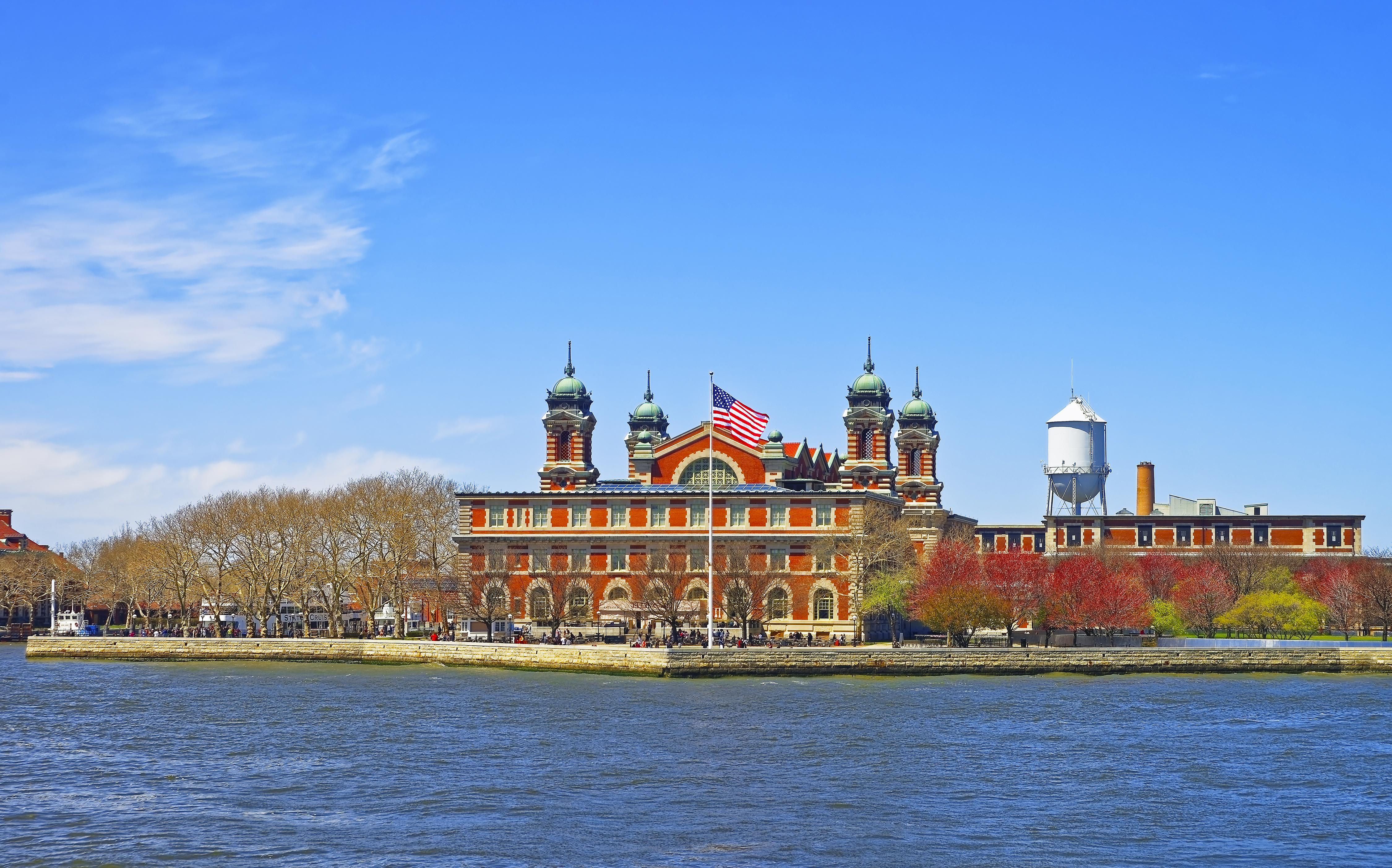
And so, states and localities generally adopted and implemented their own migration regimes. In the comparatively densely populated states of the Northeast, policymakers often adapted colonial-era poor laws and policies governing municipal settlement to restrict European newcomers’ political rights, ward off poor immigrants, and even expel foreign paupers. The New York state government barred noncitizen immigrants from voting, counted them out of the population when drawing state legislative districts, and imposed de jure and later de facto “head taxes” on shipmasters whose vessels carried immigrants to the Empire State. They also established a massive immigration processing station at Castle Garden long before the opening of its better-remembered federal successor at Ellis Island.
Further west, states and territories often adopted far more expansive policies governing white immigrants’ rights as part of a broader agenda of settler-colonialism and Native American dispossession. Antebellum-era Wisconsin actively recruited immigrant farmers from western Europe, enfranchised immigrant men who had begun the naturalization process, and included all noncitizens when crafting state legislative districts.
The American Civil War and the ensuing period of Reconstruction profoundly reshaped US citizenship law and immigration federalism. Reconstruction-era constitutional reform confirmed the abolition of slavery and established national birthright citizenship. Congress recognized Black immigrants’ naturalization rights in 1870.
Federal authorities likewise gained growing immigration powers during the Gilded Age and Progressive Era (circa 1877-1914). In 1876, the US Supreme Court unequivocally struck down state governments’ abilities to charge de facto immigration head taxes. Around the same time, federal lawmakers began adopting a series of increasingly draconian laws that barred the entry of, expelled, and surveilled growing numbers of Chinese nationals. Upholding most such provisions, the US Supreme Court increasingly recognized Congress’s broad “plenary” power to determine national immigration policies and afforded the executive branch wide berth to carry them out. In turn, late nineteenth- and early twentieth-century national lawmakers—often responding to prodding by labor unions, immigration restrictionists, and/or self-described moral reformers—adopted a range of federal statutes that sought to bar the entry of (among others): immigrant contract laborers, anarchists, sex workers, and those deemed “likely to become a public charge.”
This proliferation of national immigration laws engendered and emboldened a growing federal immigration apparatus. Its agents had broad discretion to interpret sometimes overlapping laws; they generally proved most unforgiving in implementing those policies when racialized minorities and single women were ensnared. Federal officials also often relied on collaboration with local and state authorities in matters ranging from immigrant detention to the administration of naturalization statutes. But inter-governmental cooperation was not always forthcoming. Its operation could be highly racialized in states and municipalities with large numbers of immigrants and their US-born children like California (where an Irish immigrant led the Chinese Exclusion movement).
At the same time, states continued to move in varied directions when determining the rights of noncitizens residing within their jurisdiction. Roughly two dozen (mostly southern and western) states and territories enfranchised noncitizen men at the close of Reconstruction in 1877. During the late nineteenth and early twentieth centuries, most of those laws were repealed. Meanwhile, other (mostly eastern and Pacific Coast) states adopted statutes restricting noncitizens’ access to public or publicly funded employment, licensure, and/or property ownership. The former laws were often selectively enforced in good times only to be resuscitated during periods of heightened unemployment. All these measures disproportionately harmed—and many expressly targeted—East and South Asian immigrants who were racially ineligible to naturalize.
The World War I era profoundly changed American immigration policy and the politics of immigration in the United States. A coalition of immigration restrictionists—including racist eugenicists, anti-Semitic and anti-Catholic activists, and craft labor unions (among others)—had long unsuccessfully lobbied federal lawmakers to significantly curtail “mass” immigration to the United States. Wartime nationalism, postwar xenophobia, and renewed labor conflict empowered their success. In 1917 Congress adopted literacy test requirements for adult immigrants and established an “Asiatic Barred Zone.” Federal statutes enacted in 1921 and 1924 created “national” quotas for (non-barred) sending states in the Eastern Hemisphere, thereby severely curtailing Southern and Eastern European immigration.
Though countries in the Americas were exempt from the new quota system, an ever-growing federal immigration apparatus—including a new Border Patrol—grew further empowered by this array of new laws. As such, during the Great Depression, the “likely to become a public charge” provision was employed to significantly restrict the entry of would-be immigrants into the country. Hundreds of thousands of Mexican nationals and even Mexican-origin US citizens were targeted in campaigns of coerced “repatriation.”

While federal authorities assumed (and sometimes abused) these growing immigration powers, state and local governments continued to shape immigrants’ rights within their jurisdiction. The World War I era saw the last state alien suffrage laws repealed. In the war’s wake and during the Great Depression, state and local governments enacted growing restrictions on noncitizens’ access to licensure and publicly funded employment. Some local authorities, like those in Depression-era Los Angeles, collaborated with broader racist and nativist campaigns to deny immigrants and their US-born family members’ employment and relief. Conversely, other state and local governments—such as those in and around Chicago—kept federal immigration authorities at a distance when (mostly European) noncitizen residents sought access to social services.
Alliance-building abroad and civil rights campaigns at home during World War II and the early Cold War brought about significant reforms to federal immigration and nationality law. Between 1943 and 1952, all remaining explicitly racist immigration and naturalization bans targeting East and South Asians were repealed. Sustained lobbying for further immigration reforms—by, among other groups, Italian Americans—culminated in 1965 with the repeal of the national quota system, thereby significantly expanding access to immigration from Asia, Africa, and Southern and Eastern Europe. But the Immigration Act of 1965 also created a new hemispheric quota system that included countries in the Americas. That provision, coupled with the nearly concomitant repeal of the two decades-old “Bracero” guestworker program, dramatically curtailed authorized paths of immigration from Mexico, leading to a rise in undocumented immigration. While Congress adopted legislation to legalize the status of many undocumented immigrants in 1986, subsequent attempts to enact comprehensive immigration reform—that would see pathways to regularize current undocumented immigrants’ position—have all come up short.
Meanwhile, federal court rulings issued between the late 1960s and the early 1980s struck down and/or neutered states’ abilities to implement most forms of discriminatory anti-alien hiring and licensure laws. They also upheld the rights of undocumented immigrant children to obtain primary and secondary education.
Executive immigration action has grown even more prominent in the context of congressional inaction. The militarization of the southern border, the relocation (and continued growth) of the federal immigration apparatus under the purview of the Department of Homeland Security, and executive-led action on public health and refugee crises stand out as durable landmarks of post-Cold War US immigration policymaking. Protections afforded or denied to migrants—from undocumented immigrants brought to the country as youths to those receiving Temporary Protected Status—have varied widely between presidencies.
As in previous eras, state and local governments have moved in contrasting directions in matters of immigrant rights. Some restricted immigrants’ access to social services; others expanded undocumented immigrants’ access to driver’s licenses. Some local and state governments have opted to closely collaborate with federal immigration authorities to identify undocumented immigrants. Others have declared themselves to be sanctuary jurisdictions. In short, tensions inherent to American federalism and the constitutional division of power remain present and of deep importance to immigration policymaking.
***
As political scientist Anna O. Law observes in her new book, Migration and the Origins of American Citizenship, “the arc of US migration history is characterized by a very long period of continuity and then momentous change.” With so many of the second Trump’s administration’s far-reaching immigration actions—most notably its attack on birthright citizenship—currently under court review (not to mention political contestation), it is too soon to offer conclusive reflections on the durable immigration policy legacies of the era of Trump 2.0. Its immediate impacts, however, have certainly been “momentous,” most especially for immigrants and their families ensnared by them. Equally considerable have been the responses of those opposed to the Trump administration’s agenda, most notably in the courtroom, in civic society, and by state and local governments espousing more expansive visions of immigrant rights. As the brief survey above has illustrated, they too are drawing on a lengthy, contested history of American citizenship and immigration federalism. Their actions will carry important—and resilient—legacies as well.