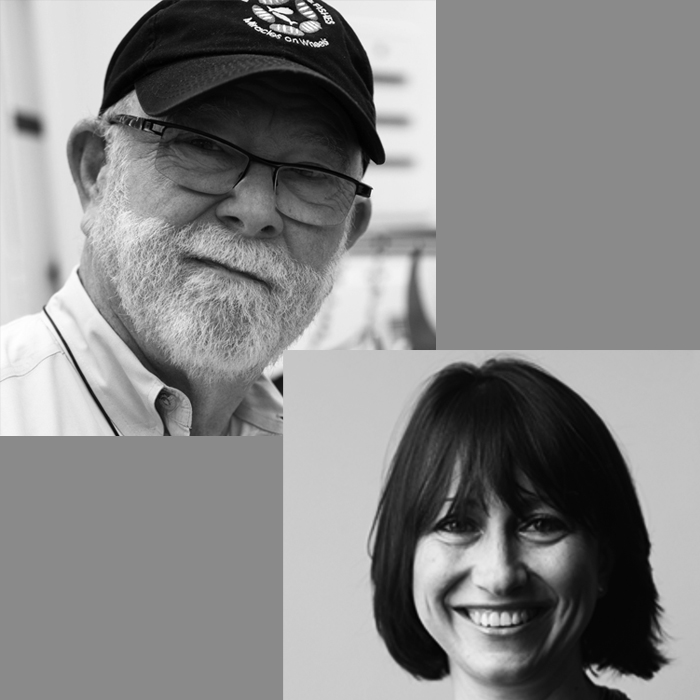
Austin, Texas, 1998. The story of Community First! Village was born one evening. On the road. Alan Graham is driving a green van loaded with basic necessities for the homeless. With him are five young men. A fine bunch motivated to do good. Little does he know yet that from that first wisp of generosity an entrepreneurial, life-sharing model with the innovative traits of com- munity experience will be launched. A beautiful challenge from below, far from the classic and somewhat tired welfare approaches. We had a chance to visit Community First! Village. Here is a summary of our conversation with Alan in which the sense of a concrete and countercultural path emerges. A path that smacks of enterprise, where everyone is aware that one can build only by taking responsibility and risk.
What gave rise to the idea of founding something like Community First! in Austin?
It all started one evening twenty-seven years ago, in September 1998, when I and five other guys went out on the streets of Austin with a green van and 75 bags of food to distribute to the men and women on the streets that evening. Those hours were a phenomenal experience for us, one that marked us deeply. So, I had the idea to buy one of those catering vans, with pitchers and whatnot, and so we did.
Three fundamental points of our approach are connected to that first purchase. First, a catering van goes where the people are. Most of the works that serve the homeless around the world take those served to a certain place-a shelter, a diner; instead, we, with the van, would go to meet them where they were and where they lived, on street corners, on bridges, wherever.
Second point, my philosophy is one of deep and generous hospitality. So if you happen to have dinner at my house, maybe it will be a simple meal, but there will certainly be plenty to eat. So when the van goes out on the streets, I want food to be available in abundance and for people to have a choice of what to eat. Normally, when homeless people are herded into one place, they each get the same ration of food. And maybe you like the vegetable soup or the ham san-dwich, but maybe you don’t -- we wanted to give people a choice.
© Mobile Loaves & Fishes
What about the third one?
The third element is the one that turned out to be the most important: those who served and those who were served were on the same side of the counter. So a man-to-man, heart-to-heart connection was needed, and that’s where the magic began. Because instead of being home-less, Martina is Martina. And, maybe next time we pass each other on the street, maybe you’ve made an impression on me, and then I say, “Hey, Martina!” and if I’ve made an impression on you, you say, “Alan!” And then at that point a bond is established, not simply a transaction, but a relationship between the two of us. That’s exactly what was happening to us: the beginning of a relationship between us volunteers and the homeless. Then, in 2003, I started going to the streets and spending the night sleeping with these friends of mine who live on the streets. I spent about 250 nights in this way.
What did that mean in your relationship with the homeless?
At that point, by dint of sleeping with them on the street, I began to form very close bonds with people. If before we were just acquaintances, slowly we started to become friends. Some began to trust me more, some found themselves sharing things about their lives with me. “You know, my parents used to give me drugs when I was little so I would stay quiet and they could have parties,” “You know, my uncles used to molest me,” “You know, I used to get beaten up all the time as a kid,” and so on. That’s when a deeper and more complete understanding of who the human person is began to emerge in us, who the one there is on the street.
Which is?
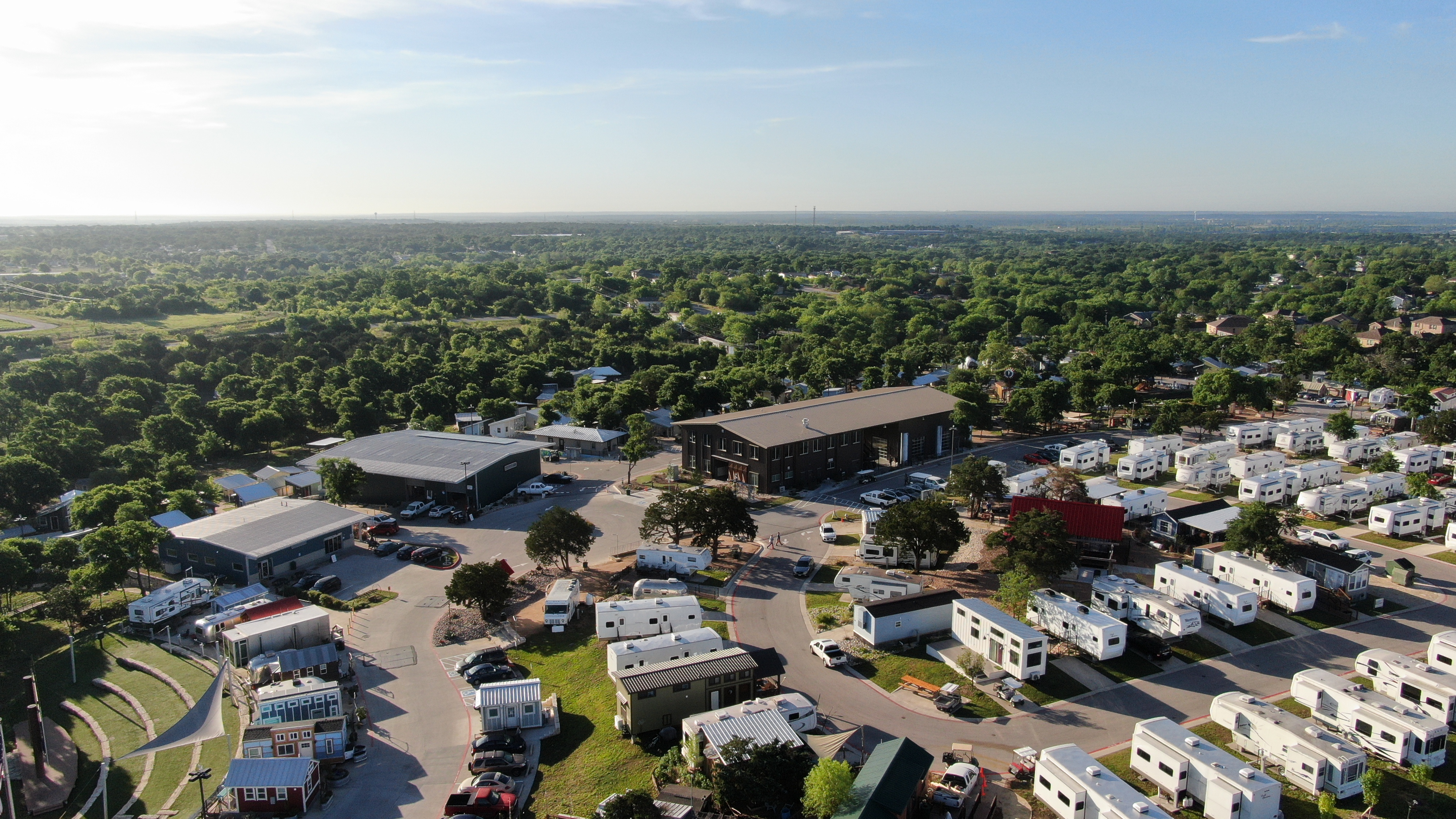
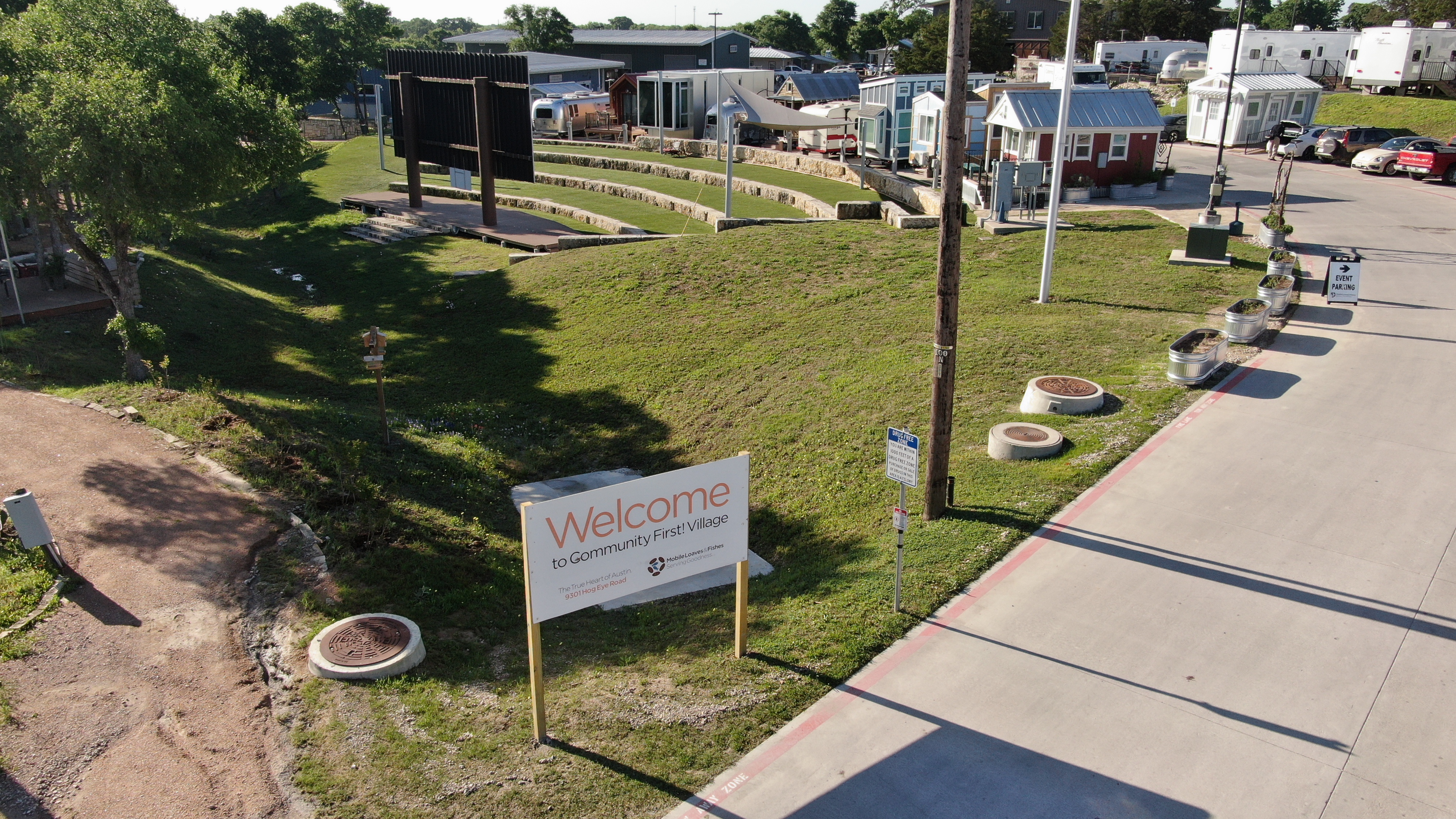
It became clear to us, and it seems to us that the data confirms it as well, that the main root cause of homelessness, everywhere in the world, is a deep and catastrophic family experience where, perhaps, there is a drug addict, or a family member who has a mental health problem. And so in 2005 I came up with the idea of buying an RV, taking a person off the street and taking them to a private RV park. The attempt worked, and so I repeated the same thing a second, a third, a fourth time again, until I asked myself: but why don’t we build a community? From there, in 2005, we started planning it. It took nine years before we started building it, in 2014. The following year we moved our first residents there, and now we are a movement that is resonating all over the world.
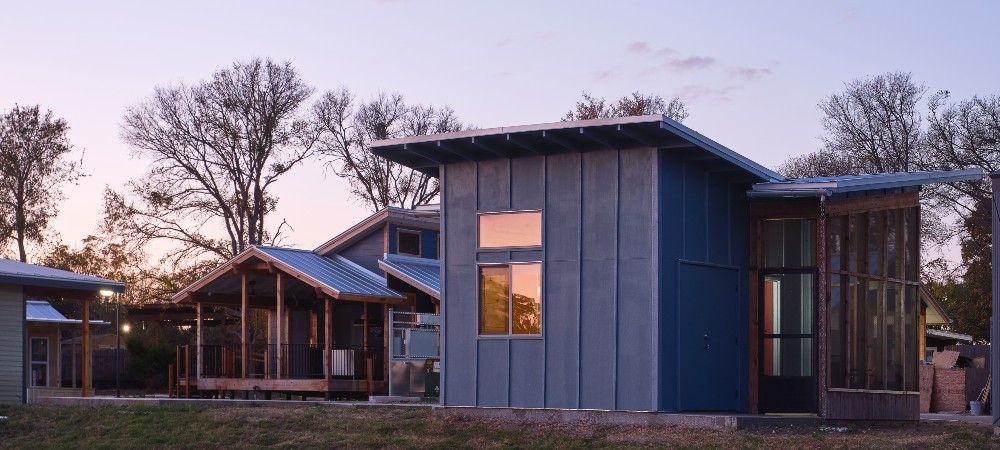
When I saw the photographs of Community First!, I was fascinated by the beauty of each home and the community floor plan developed around a common space in the center. Where did the Community First project come from?
My leadership philosophy is to first build a vision around an idea and then to invite as many people as possible to share in the project. My initial intention was to build an RV park. Then pe- ople got excited about the idea of building a community based on the fact that the main cause of the problem for homeless people is the loss of family; there was an urgent need to help rebu- ild the family structure for people who don’t have a mother, father, siblings...
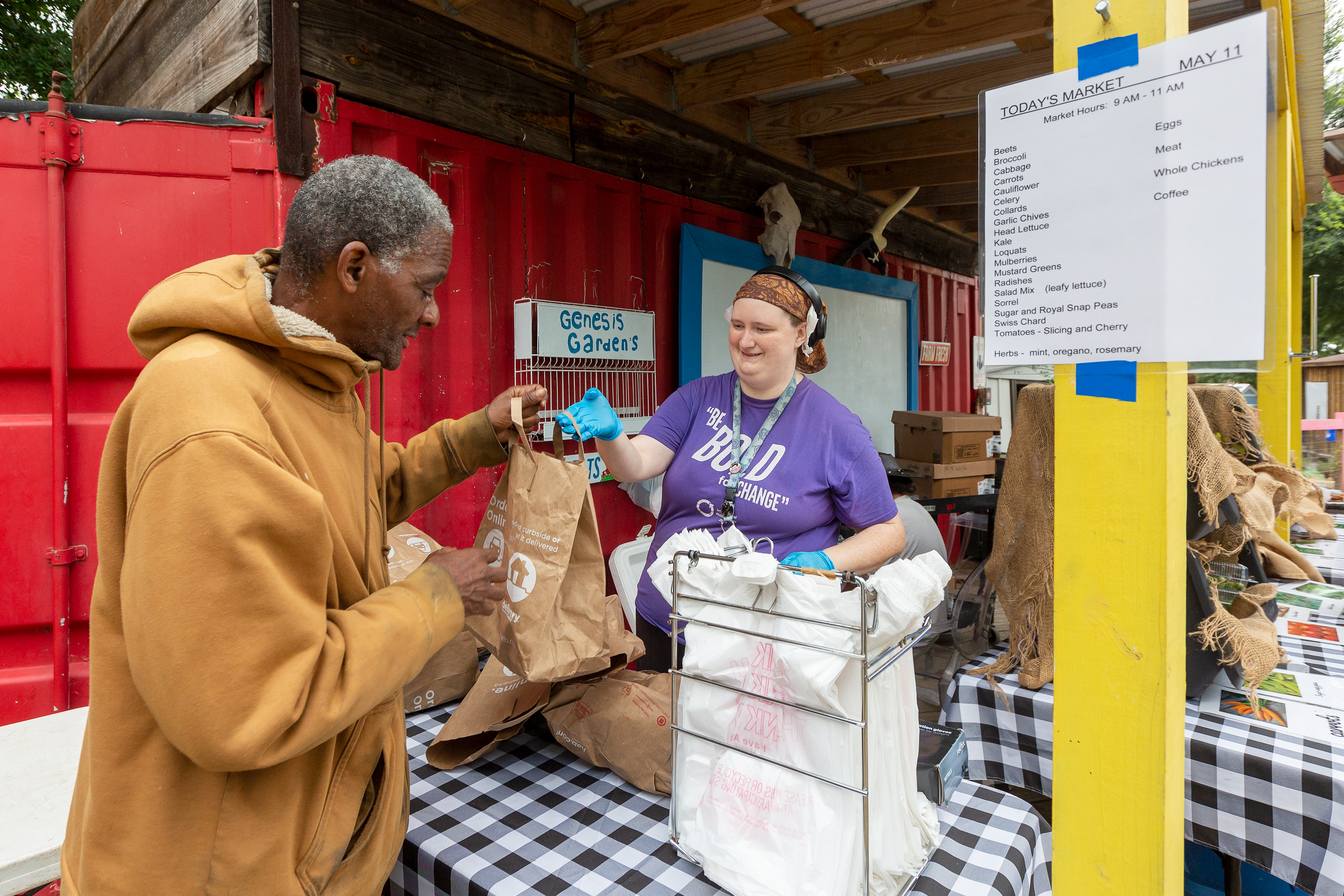
I planted a mustard seed and invited others to water it and take care of it, and now that seed has grown into a beautiful tree. I am not an agronomist, but at Community First! we grow fruits and vegetables. I am not an artist, but at Community First! we have our own version of Bansky. Others then have come to teach us how to mine the talent that exists in every single human being, whoever they may be, starting with the principle that whatever gifts you have, whatever you love to do, whatever passion you have, can be directed, if you are called upon to do so, to the service of the homeless. Rather than inviting you to make photocopies, fold brochures, stuff pamphlets, glue stamps, and mail envelopes, part of my leadership task is to try to understand what your talents are (maybe you’re a musician or an artist, a lawyer or an engineer), recognize that we need these gifts of yours, and figure out how we can put them to good use for the benefit of what we’re doing.
Compared to the typical welfare approaches in the United States towards the homeless, veterans, drug addicts, it seems to me that your approach is counter-cultural...
Yes, it’s true, we are counter-cultural to a system that is basically run by the government, which, not wanting to take risks, never brings any innovation, because innovation only comes through risk-taking, you have to be able to be willing to fail. Our experience goes against the grain of the U.S. government model, and probably against any government model, and instead moves in line with the entrepreneurial model with which we operate in the United States, which requires the entrepreneur to act outside the box with a level of creativity and innovation that cannot be achieved by working within the predetermined forms.
© Mobile Loaves & Fishes
It seems to me that the work done by Community First! by betting first and foremost on the person – and the person in relationship with others – is very different from a typical top- down welfare approach, where I come and help you, am I wrong?
I think you are right. Many times, the way we try to deal with problems is deeply transactional. We live in the time of a mindset that wants to try to fix and repair everything, including human beings. Whereas, if you and I end up getting to know each other thoroughly, eventually there will be things about you that I won’t like, and there will be things about me that you won’t like, but I don’t think I can fix the things about you that I don’t like, and vice versa. And it is no different with my wife, even though we have been together for 43 years and we are the best of friends!
What we try to do is learn to tolerate those aspects of the other person that don’t fit into our personality type, even to the point of recognizing the trauma one may have grown up with as a child, or recognizing complex neurological problems that underlie certain behaviors.
How does Community First! concretely help people with a history of suffering or neurological complexities?
This place accepts you for who you are. This does not mean that all behaviors that one might exhibit are accepted, but that one is accepted first and foremost for who one is. So, if you come from a traumatic family background, if you have been in prison, if you are a drug addict or alcoholic, if you have a mental problem or substance addiction, whatever it is, we will accept you for who you are. What we don’t accept are behaviors that have a negative impact on the community. So, if your addictions, your mental or physical health issues, or your previous trau- ma led to aggressive, noncommunity behaviors, we will try to work with you, and if you are not willing to work with us, this may not be the right place for you.
Explain to me what is the role of the families you have asked to come and live at Community First! How does their presence enrich the community?
This is one of our secret ingredients! We call them Missionals, and they currently make up about 10 percent of Community First’s population! They are families who feel called to live among the poor, the disadvantaged, the despised, the marginalized in our society, and are in many ways a healthy witness to them. They also give us eyes and ears on the community that we would not have.
Can we say that the experience of Community First! is a concrete exemplification of the principles of the culture of subsidiarity?
Yes, it is. Our fundamental principle is really grassroots, bottom-up. It’s me lifting one person off the street, it’s me lifting a second person off the street, and most importantly, it’s me being in relationship with these people I’m lifting off the street. That’s why the idea of subsidiarity is crucial: the government plays a role, but it should not play the main role. It should be you and I who can play the main role for that person on the street corner.
Is it possible to make an experience like this sustainable?
Well, I’m not even sure I like the word “sustainable.” I think it’s an overused term. 100 percent of the people who move from the street to Community First! will have to be subsidized for the rest of their lives, costing about $22,000 per year per person. This amount has to be found somewhere, and this experience can never be self-funded; it will always have to be supported by someone. And hopefully we will always have the resources to do that.
But on the other hand, I bet when you go out to dinner with your parents, most of the time they pay for the meal, even if you can afford it. My children are 32 to 42 years old and they are inde- pendent, but still they don’t have everything under control, and there are many things I would like to do to help them, and to the extent that I am able to do that, I will continue to do that as long as I am alive. When I’m 80, I will continue to want to buy dinner for them even if they are 50-60 years old.
So, I think we have to look at this problem differently and understand that there is a relatively very small percentage of our population, about one-tenth of 1 percent of the population of the United States, that will have to be subsidized for life, and that will cost a lot of money.
I actually share your aversion to a certain meaning of the word “sustainability,” which one ends up equating with obsessive activism. Quite different is, on the other hand, when the question of sustainability starts from an awe for creation, when awe for the person, for nature as a gift, arouses a desire to protect it and make it thrive. It seems to me that the deep empathy you testify to the suffering of the homeless is not divorced from such a wonderment. You have said that your desire is to build works that bear witness to the beauty of creation. In what sense?
If I may quote Scripture, this refers to chapter two of the book of Genesis. The chapter tells how things originally happened. As a first thing, God created the heavens and the earth. When the earth was created, it was barren, because there was no water to feed the earth and no man to till it and work it. Then, suddenly, water began to flow out of the ground and move throu- ghout the earth, grass and trees began to grow, and God came down from heaven and grabbed a lump of clay and began to mold you and me. There are several characteristics of you and me that are similar: we both have one head, two arms, two legs. All the body parts are similar, but the way He thought and created you is profoundly different from the way He created me. When He created you, He did it in a very intimate way. He entered you and shaped you as a potter would. And in my opinion, in that creation, in that molding God was telling us that this is what he wants you and I to do for each other.
Then he created this inanimate object and named it Martina - beautiful, but lifeless. To make you alive, he had to blow into your nostrils. Now, I cannot blow into your nostrils from a distan- ce. I have to go deep and do it. And that, too, is a very intimate mirror of what I think God calls us to do for each other, toward those who are part of our lives: to mold each other and infuse life into each other.
Then God created the garden of Eden, in which there were all these fantastic things, fruits and trees growing, animals that were beautiful to look at, that kept us company and, for those of us who are carnivores, tasty to eat. And right after he created the garden, he took man and pla- ced him in the garden of Eden to cultivate it and take care of it. To me this is the pattern of all human existence. First, you and I desire to be “placed.” Second, God wants us to cultivate. And when you have settled down and you are cultivating what you like and what God has destined you to do, then you begin to worry about things outside of who you are. When we bring people from the street who are begging, who need spare change, to a place where they can settle down and cultivate, we see them turn around and start being generous and caring about things outside of themselves. This is our model.
While you were speaking, I was reminded of the concept of integral ecology that Pope Francis talks about in the encyclical Laudato Si’. Do you think Community First! can be considered a work that expresses the novelty of this integral ecology?
Yes, I think so. Right now, we spend a lot of time thinking about climate change. But I think the most important thing we can do about climate change is to take care of the human beings we have on Earth. If we could free human beings from the misery that they live in on Earth, the billion people who live in total squalor, without running water, without sewers, without garbage collection, that in itself would almost instantly heal the damage that we humans are doing to the Earth. We don’t have to convert everyone to solar cars, that is a stupid solution because even when we all had solar cars, the poor would still live in squalor. How, instead, can we get them out of that situation? That is what I think will heal the Earth. I think the Pope in Laudato Si’ is communicating this very thing to us, reminding us how integrated the whole is. If we don’t start with man, we will fail. If we think we can change the fate of the Earth without changing the fate of the people who live on the Earth, I don’t think it will work.
© Mobile Loaves & Fishes